Emerging Destinations 2026: Eastern Europe, the Cities to Discover Before Everyone Else Does
Why Eastern Europe in 2026
There's a precise moment when a destination stops being emerging and becomes mainstream. For Eastern Europe, that moment is approaching — but it hasn't arrived yet. And that's exactly why now is the right time to go.
Warsaw, Prague, Krakow, Bratislava, Bucharest: five capitals with layered histories, some of the most beautiful old towns on the continent, and a cultural and gastronomic scene that has completely reinvented itself over the last decade. These are no longer budget weekend getaways.
They're full destinations — places where you can spend a week without running out of things to discover, and come back feeling like you've seen something most travellers haven't quite caught up with yet.
Warsaw — the city that rebuilt itself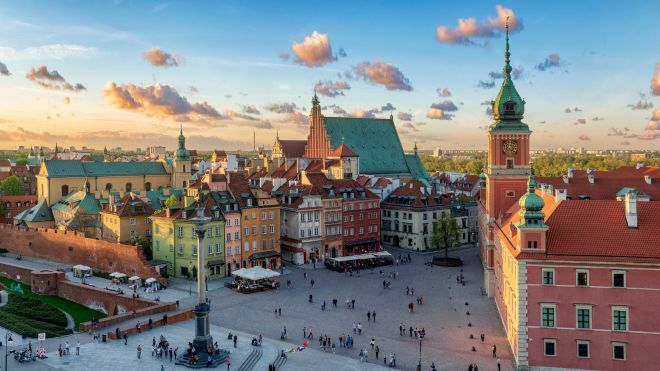 varsavia-easytransfer24.jpg 58.48 KB
Warsaw is probably the European capital with the most dramatic history and the most remarkable comeback. Destroyed over 80% during the Second World War, it was rebuilt almost from scratch — and the old town reconstructed brick by brick is now a UNESCO World Heritage Site, a unique case of faithful urban reconstruction anywhere in the world.
But Warsaw in 2026 isn't just about the weight of history. The Praga district (same name as the Czech capital, confusingly enough) has become the city's creative hub: art galleries, cocktail bars, international street food in converted industrial buildings. Wilanów, with its royal palace and French-style gardens, is one of the least-known royal residences in Europe. The POLIN Museum of the History of Polish Jews is widely considered one of the best museums opened in Europe this decade.
The food scene has exploded. Warsaw's restaurants now hold their own against far more celebrated capitals — reimagined Polish cuisine, internationally recognised chefs under 35, a coffee culture that rivals Vienna.
When to go: May and September are the sweet spot. Summer is lively but crowded; winter is cold but atmospheric, especially around the Christmas markets.
Getting there: Warsaw has two airports. Chopin international airport (WAW) is the main international hub, close to the city centre and served by scheduled airlines — a private transfer from Chopin Airport is the most straightforward option.Varsavia Modlin Airport (WMI) is used by low-cost carriers and sits about 40 km from the city. Public transport exists but becomes awkward with luggage or late-night arrivals — a private transfer from Modlin to Warsaw city centre is the only option that works without reservations.
Prague — beyond the postcard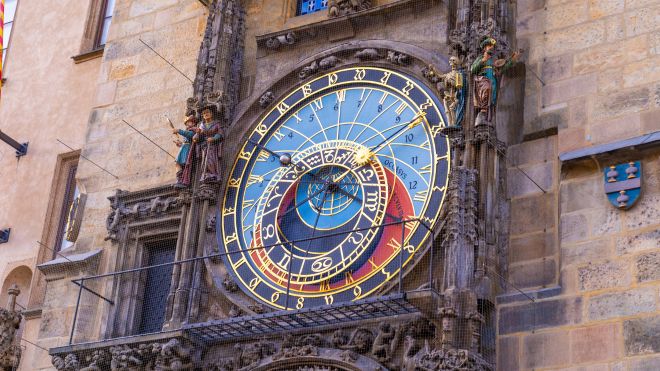 orologio-praga-easytransfer24.jpg 78.46 KB
The risk with Prague is stopping at the postcard: Charles Bridge, the castle, the astronomical clock. They're extraordinary — but they only tell part of the story.
Vinohrady is where Prague actually lives: Art Nouveau apartment buildings, neighbourhood markets, restaurants full of locals rather than tourists. Žižkov, , with its television tower covered in crawling baby sculptures and a working-class, anarchist history, is one of the most distinctive neighbourhoods in Europe. The Jewish Quarter of Josefov contains some of the best-preserved medieval synagogues in the world.
The food scene has made a genuine leap in quality over the last ten years. Traditional Czech cuisine — stews, bread, beer — remains essential, but alongside it there are contemporary restaurants, artisan food markets and a coffee culture that's become quietly excellent.
Prague has also grown into a serious hub for international conferences and quality business travel, which means outstanding hotel infrastructure — often inside historic palaces in the first district.
When to go: April–May and September–October. July and August are the most crowded months — the old town becomes genuinely difficult to enjoy at a relaxed pace.
Getting there: Václav Havel Airport (PRG) is modern and about 20 km from the centre. Worth knowing: much of Prague's historic centre is a restricted traffic zone (ZTL), with access rules that vary by area. Arriving with a driver who knows the city saves the classic confusion on arrival.
Krakow, Bratislava and Bucharest — three reasons to go before the crowd doesbratislava-easytransfer24.jpg 55.13 KB
Krakow — the university city that surprises
Krakow is perhaps the most beloved Polish city among European travellers — and still somehow underrated relative to what it offers. The medieval old town is among the most intact in Central Europe, Wawel Hill with its royal castle dominates the skyline, and the Jewish quarter of Kazimierz — filming location for Schindler's List — is today one of the most creative and energetic neighbourhoods in Poland.
The city is young and university-driven, full of bookshops, jazz clubs and restaurants where you eat extremely well for significantly less than in Western Europe. The covered market of Sukiennica in the main square is one of the few functioning medieval trading halls left in Europe.
Less than an hour away is Auschwitz-Birkenau: a difficult but necessary visit that many travellers build into their itinerary.
John Paul II Airport (KRK): 15 km from the centre, easy to navigate. Taxi availability can be limited in the evening — booking a transfer before landing is the safer choice.
Bratislava — the capital nobody expects
Bratislava is systematically overlooked, squeezed as it is between Vienna (60 km away) and Budapest. That would be a mistake to keep making.
The old town is compact, walkable in a few hours, with medieval and Baroque architecture that genuinely surprises first-time visitors, and a density of historic cafés and taverns that feels like a small Central European capital from the late nineteenth century. Bratislava Castle, with its four white towers, dominates the city and offers views over the Danube that are worth the trip on their own.
New boutique hotels and restaurants are raising the quality of the offering without the city having lost its human scale. In that sense, it's what Prague was twenty years ago.
Milan Rastislav Štefánik Airport (BTS): small, efficient, 9 km from the centre. A private transfer gets you into the old town in twenty minutes.
Bucharest — the boldest bet
Bucharest is hard to categorise, and that's probably its greatest appeal. Architecture that mixes Belle Époque, monumental Soviet-era buildings and contemporary new construction. Neighbourhoods like Floreasca and Dorobanți with Art Nouveau villas half-hidden among plane trees. The Palace of the Parliament — the second largest building in the world after the Pentagon — as a permanent reminder of an era that no longer exists.
But it's the new Bucharest that genuinely surprises. A generation of creatives, chefs and entrepreneurs has, over the last five years, opened restaurants, galleries and boutique hotels that now appear in international guides. Romanian cuisine — long overlooked — is going through a serious reappraisal, with local ingredients, reinterpreted traditional recipes and a focus on seasonality that echoes the best Nordic restaurants.
Henri Coandă Airport (OTP): the main hub, functional. The transfer to the centre is not complicated in itself, but taxi quality remains uneven. Booking a private transfer in advance is particularly recommended here compared to other airports in the region.
How to organise your Eastern Europe trip: a few practical notes
Each capital has its own logistical quirks. The airports work well, but the transfer to the city centre — especially in the evening or in cities with extended restricted traffic zones like Prague — requires a minimum of forward planning.
Booking a private transfer with EasyTransfer24 means the same standard of service in every destination: price agreed before departure, verified driver, no unpleasant surprises at the terminal exit.
When to go: spring and autumn are the ideal seasons across all five cities. Summer brings more crowds and higher prices; winter has its own particular atmosphere — especially Krakow and Warsaw under snow — but requires planning around the cold.
Budget: compared to Western Europe, these cities still offer a significantly better value-for-money ratio. A design hotel in central Warsaw or Bucharest typically costs less than half the equivalent in Milan or Paris.